
AI Powered Dual Vision Camera System
AI-Powered Wide-Area Detection and Precision Visual Identification in a Unified Optical Layer
Overview
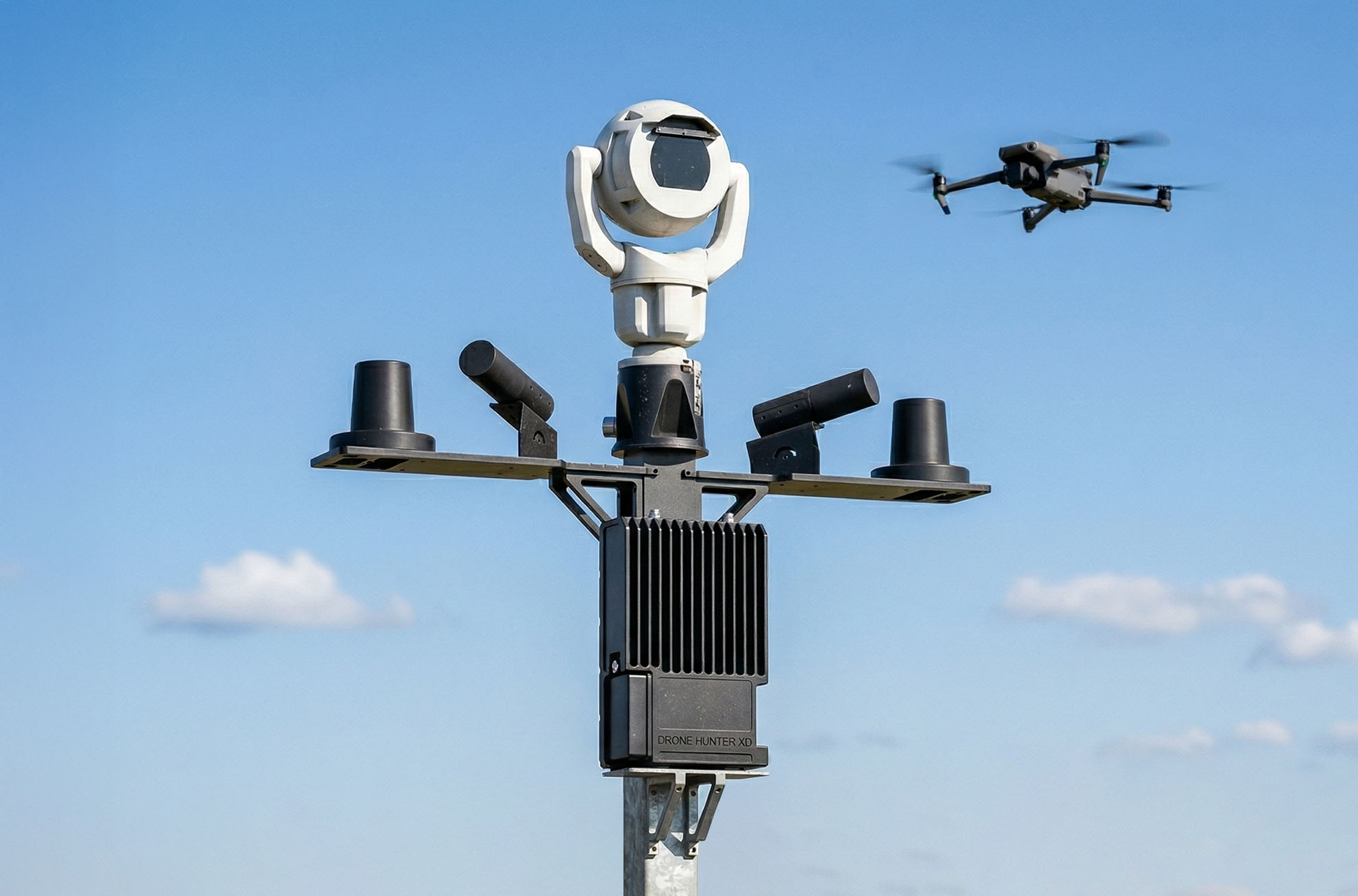
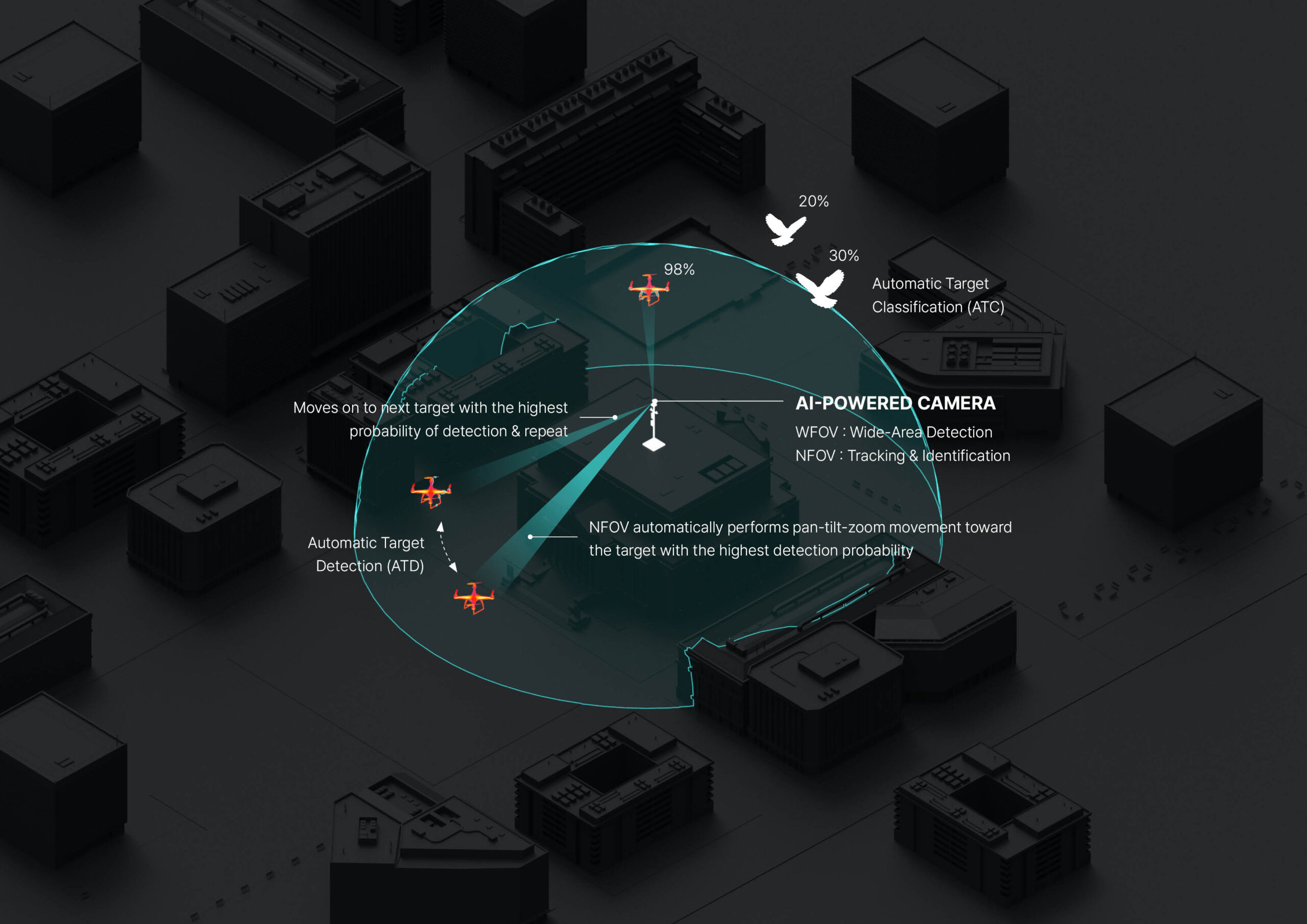
The AI-powered Dual Vision Camera System combines a Wide Field of View (WFOV) camera for wide-area surveillance with a PTZ Narrow Field of View (NFOV) camera for precision tracking and identification. Operating as a unified AI-driven optical layer within the C-UAS architecture, the WFOV camera continuously monitors large areas to detect aerial targets, while the NFOV camera automatically tracks the target and performs kinematic-based analysis for identification and final threat verification. This coordinated operation enables rapid tracking and reliable target classification in both day and night conditions.
Features
- 01 AI-powered video analytics for real-time aerial threat detection
- 02 Autonomous multi-target tracking and prioritization
- 03 Kinematic-based classification for accurate threat differentiation
- 04 Automatic cueing from WFOV to NFOV for precision tracking
- 05 AI-assisted visual identification and confirmation
- 06 Continuous object tracking with target persistence
- 07 Day & night operation using EO/IR imaging
- 08 Seamless integration with RF detection and multi-sensor systems
Operational Advantages
- Detection capability independent of RF emissions
- Reliable identification of RF-silent and low-signature threats
- Reduced false alarms through AI-driven classification
- Enhanced multi-target awareness across wide areas
- Significant reduction in operator workload
- Continuous surveillance without manual sensor control
- Improved decision-making through real-time visual intelligence
AI Powered Dual Vision Camera System Specifications
| Detection Range (Day) | >1 km (0.3 m drone size) |
| Identification Range (Day) | 500 m to 700 m (0.3 m drone size) |
| Classification Range (Day) | >500 m (0.3 m drone size) |
| Night / Low-Light Detection | 300 m to 500 m (0.3 m drone size) |

WFOV - Detection & Analytics Layer
The WFOV camera provides persistent wide-area monitoring, continuously feeding visual data into the AI analytics engine. It enables early detection, multi-target awareness, and prioritization of aerial objects across large sectors.
- • Wide Area Optical Surveillance
- • Early-Stage Aerial Target Detection
- • Automatic Object Detection and Tracking
- • Cueing Support for NFOV/PTZ Systems
- • Day and Night Operation
- • Early Visual Situational Awareness for Wide Defense Areas
- • Rapid Threat Identification and Response
- • Reduced Identification Time
- • Efficient Integration with Multi-Sensor C-UAS Systems
NFOV PTZ EO/IR - Tracking & Identification Layer
The NFOV camera is automatically cued by the analytics engine to focus on high-probability targets. It performs precision tracking and AI-assisted visual identification, applying kinematic analysis to confirm and classify threats with high accuracy.
- • AI-Based Visual Identification
- • Autonomous Threat Analysis
- • Automatic Target Tracking and Recognition
- • Target Classification Based on Kinematic Characteristics
- • All-Weather Day and Night Operation
- • Unparalleled Target Identification Accuracy
- • Reduced Operator Workload
- • Clear Visual Target Verification
- • Seamless System Integration with Multiple Sensors